Popular Keywords


About TrendForce News
TrendForce News operates independently from our research team, curating key semiconductor and tech updates to support timely, informed decisions.
[News] TSMC Reportedly Plans 12 New Advanced Process and Packaging Fabs in Taiwan as 2nm Supply Tightens
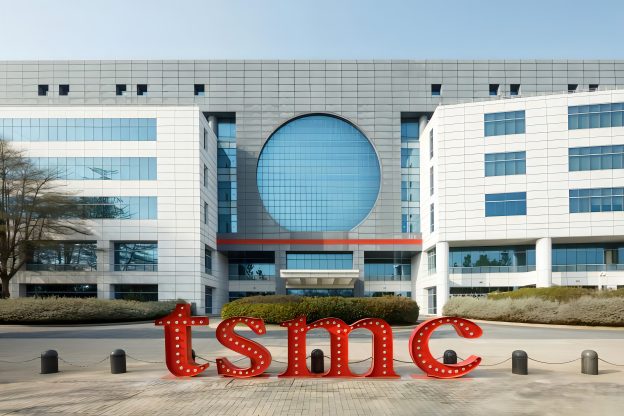
Recently, NVIDIA CEO Jensen Huang made a whirlwind visit to Taiwan, attending TSMC’s sports day. Sources said he came to request more chips from the company, underscoring the strong demand for its advanced process capacity. According to Liberty Times, as AI chip demand soars, TSMC’s 3nm capacity has become so tight that further expansion is required, while its 2nm process is also in short supply. The report adds that the company may invest in up to 12 new advanced wafer and packaging plants in Taiwan next year to meet the surging demand.
The report, citing sources, notes that TSMC’s seven fabs in Hsinchu and Kaohsiung are no longer sufficient to meet rising demand, and the company will need to secure additional land for new facilities. It also estimates that TSMC’s capital expenditure in Taiwan is set to increase next year, reaching approximately NT$450–500 billion (about US$14–16 billion).
As the report indicates, TSMC recently raised its full-year capital expenditure guidance from the previously planned US$38–42 billion to US$40–42 billion. About 70% of the spending will go toward advanced process technologies, 10–20% toward specialty technologies, and another 10–20% toward advanced packaging, testing, and other related areas.
TSMC Kicks Off 1.4nm Fab Construction in Central Taiwan
In addition to its 3nm and 2nm fab projects, TSMC is pushing toward even more advanced nodes. As noted by Economic Daily News, the company’s new 1.4nm fab in Central Taiwan Science Park began foundation work on November 5, with a total investment estimated at NT$1.5 trillion. Trial production is scheduled for completion by the end of 2027, followed by mass production in 2028, with annual revenue expected to surpass NT$500 billion.
AI Boom Tightens TSMC’s 3nm Supply
Demand for TSMC’s advanced process technologies remains strong. Institutional investors cited by Commercial Times note that the company’s 3nm revenue share rose to 23% in the third quarter, surpassing 5nm growth and becoming a key driver of overall performance. NVIDIA’s next-generation Vera Rubin GPU and Rubin Ultra platform both use TSMC’s N3P process. In addition to NVIDIA, AWS’s in-house AI chip Trainium 3 and Google’s custom AI accelerator TPU v7p are also expected to compete for 3nm capacity next year, keeping supply tight for TSMC.
Read more
- [News] TSMC Reportedly Notifies Clients of 8–10% Sub-5nm Hike in 2026, Apple A- & M-Chips Affected
- [News] TSMC Reportedly Flags 3–5% Price Hikes for Sub-5nm in 2026, Ripple Effects on Mature Nodes Expected
(Photo credit: TSMC)
Please note that this article cites information from Liberty Times, Economic Daily News, and Commercial Times.